

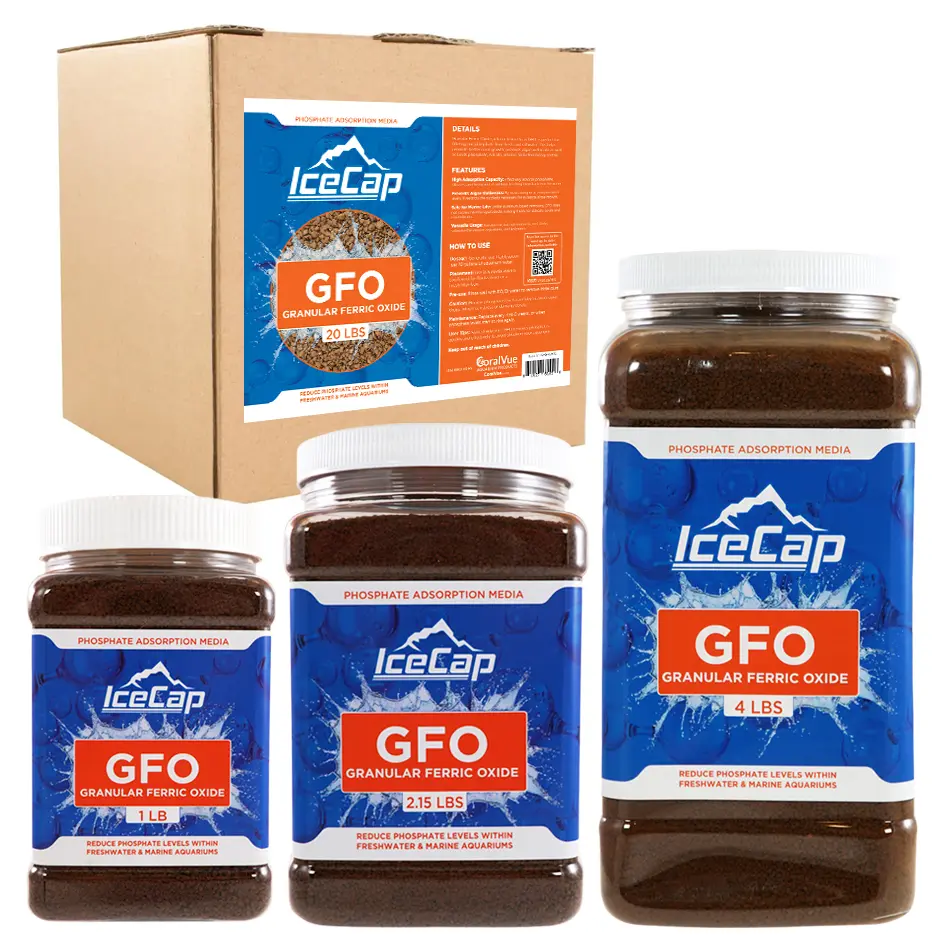
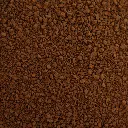
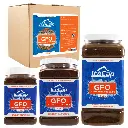
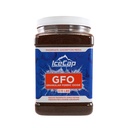
IceCap GFO, Large 4lbs
SKU: IC-GFO-LG
- Aggressive Phosphate & Silicate Bind: Chemically adsorbs dissolved orthophosphates and silicates to eliminate the primary food source of nuisance hair algae and diatoms.
- Optimized for Fluid Upflow Reactors: Premium standard granular grading provides an ideal balance of density and particle size for easy fluidization without high-power pumps.
- 100% Aluminum-Free Composition: Pure iron-based formulation guarantees zero aluminum leaching, making it completely safe for sensitive hard corals and marine invertebrates.
- Improves Calcification & Growth: Stripping excess phosphates out of the water column helps accelerate health, skeletal calcification, and vivid color expression in SPS/LPS corals.
- Resealable Freshness Container: Packaged in a heavy-duty, airtight jar that protects the dry granules from ambient moisture degradation and clumping over long-term storage.
- Universal Water Application: Fully compatible and chemically non-reactive across high-salinity marine reef displays, freshwater community tanks, and African Cichlid environments.

IceCap
Premium aquarium equipment without the premium price. Protein skimmers, pumps, reactors, heaters & more.
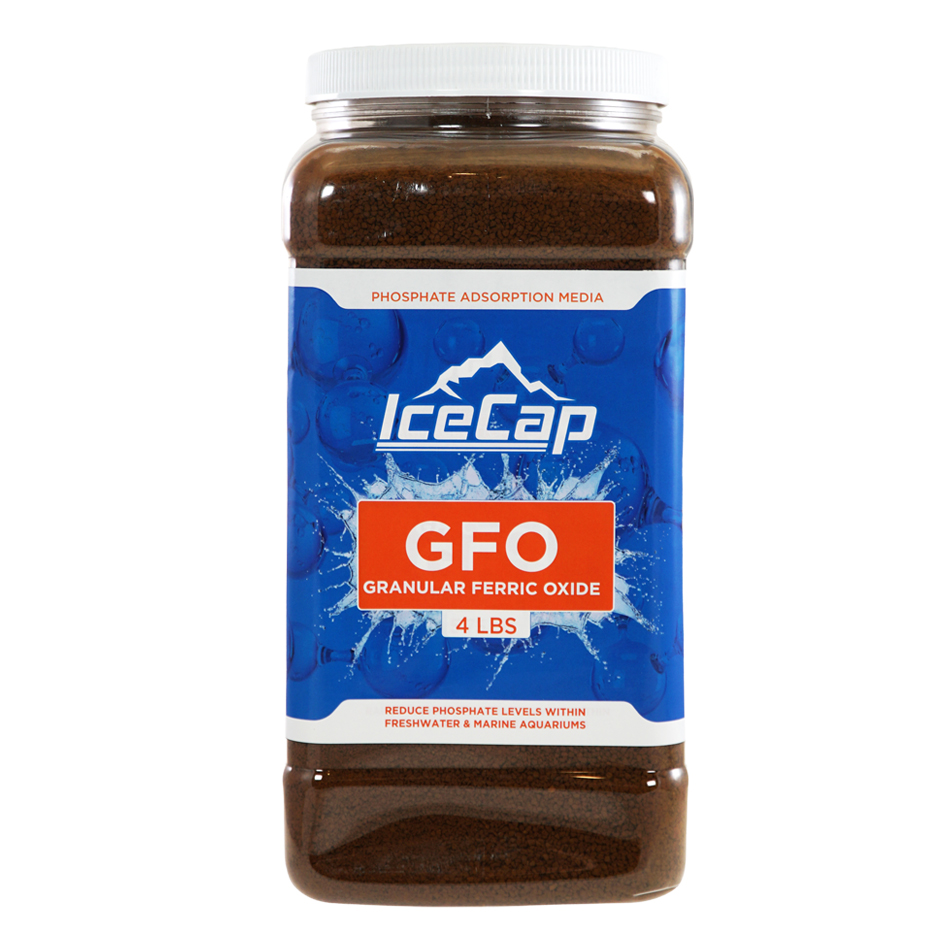
IceCap Standard Granular Ferric Oxide (GFO) Filter Media — 4lbs
The IceCap Standard GFO 4lb Jar (SKU: IC-GFO-LG) is an authentic, laboratory-grade chemical filtration media distributed by CoralVue to offer targeted, predictable nutrient management in progressive marine reefs and high-load freshwater aquariums. Elevated phosphate levels are one of the most common hurdles to long-term aquarium success; left unmanaged, excess phosphates fuel aggressive outbreaks of green hair algae or cyanobacteria and chemically block corals from building calcium skeletons. The IC-GFO-LG steps in as an indispensable nutrient sponge, using a highly porous iron oxide matrix to snare and permanently trap unwanted phosphate and silicate molecules out of the water column before they can fuel an environmental imbalance.
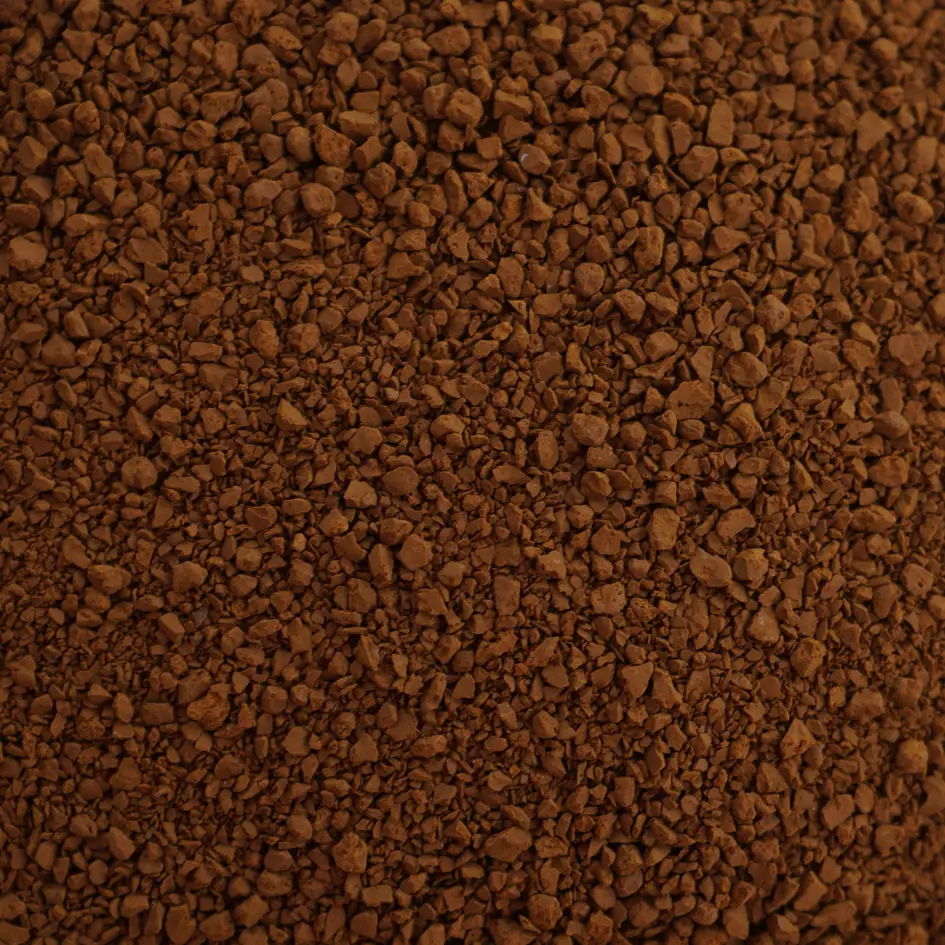
Unlike dense, heavy "high-capacity" GFO variations that require specialized high-pressure pumps to move, IceCap's standard granular layout features an intentionally lighter, high-surface-area architecture. This makes it incredibly easy to fluidize inside standard upflow canisters, such as the IceCap INT or EXT media reactor series. As water moves vertically through the granular bed, each particle lightly simmers, continuously exposing new chemical binding sites to the water stream without compressing or creating low-flow channel paths. Safe, reliable, and completely free of toxic fillers, this larger 4-pound configuration offers additional volume for large aquariums, heavily stocked systems, or hobbyists who prefer purchasing filtration supplies less frequently.
Key Features:
Mitigates Nuisance Algae Proliferation: Directly starves invasive green hair algae, bubble algae, and film diatoms by lowering water phosphates to natural, undetectable coral reef baselines (~0.02 ppm).
Protects Inhabitant Respiration: Provides an iron-based chemical lock that never leaches trapped nutrients back into the water grid, even when the media passes its structural saturation threshold.
Prevents Dense Media Clumping: The tailored standard granular shape resists sticking together under stable flow conditions, maximizing contact time across the entire canister volume.
Note: This filtration package includes 4 pounds of loose standard GFO within a resealable storage jar. Fluidizing media reactors, mesh media bags, and chemical water test kits are sold under separate product categories.
IceCap GFO Filter Media Bulk Sizing Matrix
What’s Included:
(1) 4lb Resealable Jar of IceCap Standard Granular Ferric Oxide (GFO) Media
Technical Specs:
Official Manufacturing Title: IceCap Granular Ferric Oxide (GFO), Large, 4lbs
SKU / Factory Part Identifier: IC-GFO-LG
Total Net Product Weight: 4.0 lbs (approx. 1.81 kg)
Primary Media Structure: Standard Raw Iron-Oxide Granular Grade
Target Adsorption Profile: Orthophosphates (PO4) and Dissolved Silicates (SiO2)
Chemical Safety Matrix: 100% Aluminum-Free & Non-Toxic to Aquatic Life
Average Media Lifespan: 4 to 8 Weeks (dependent on biological waste levels)
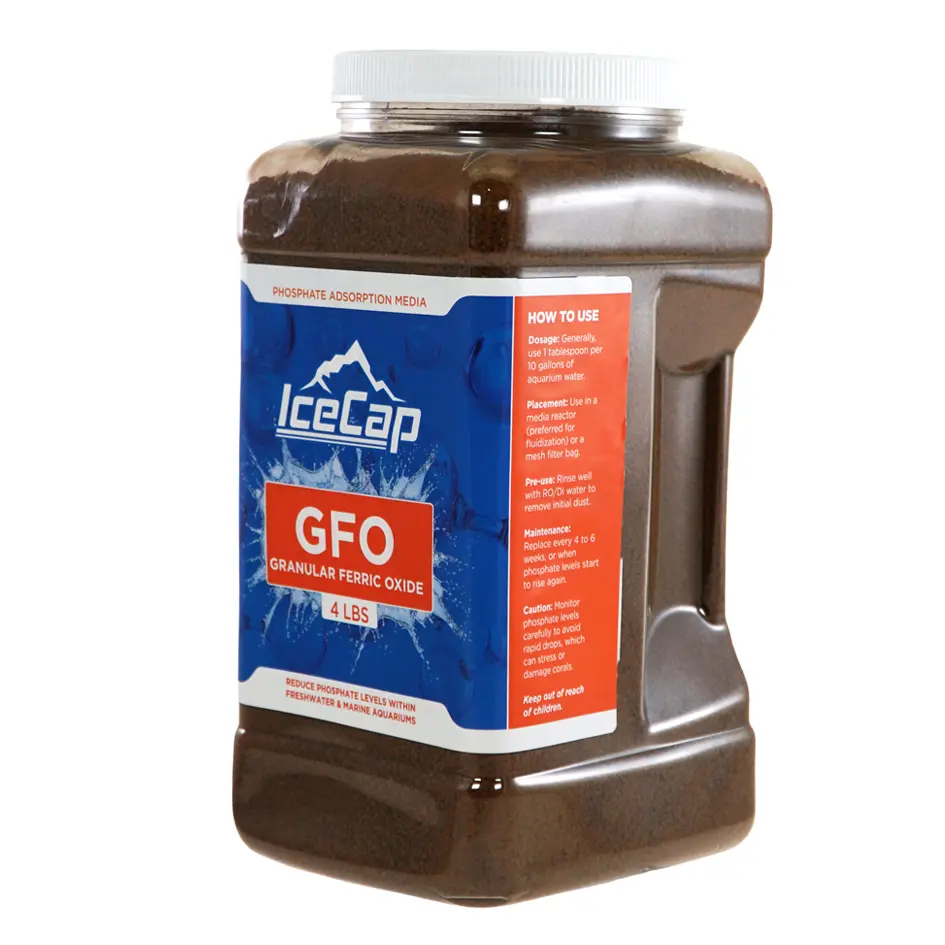
Recommended Starting Dosage: 1 Gram per Gallon of total system volume (approx. 1 Tablespoon per 10 Gallons)
Instructions:
- Calculate your initial dosage. The industry standard starting line for standard GFO is 1 gram per gallon (roughly 1 tablespoon per 10 gallons) of total water volume. Caution: If your system has high existing phosphates, start with half this amount to prevent a rapid nutrient drop from shocking sensitive corals.
- Pour the dry media granules directly into your fluidizing media reactor chamber or into a fine-mesh media bag.
- Rinse Thoroughly: GFO naturally builds up ultra-fine iron dust during transit. Place your reactor's outlet tube into a utility bucket and turn on your feed pump, flushing the media with fresh RO/DI water until the water runs completely clear before routing the plumbing back into your sump.
- Set your reactor's water loop speed. Adjust the input ball valve until the top layer of the GFO bed is gently tumbling like a soft boil. The lower granules should stay mostly static while the top surfaces simmer smoothly.
- Use an accurate low-range phosphate test kit (such as a digital colorimeter) to monitor your water weekly.
- Replace the media entirely every 4 to 6 weeks, or immediately if your phosphate readings begin to climb back above your target threshold (typically 0.03 ppm).
Pro Tips:
- Watch Out for "Cementing"—Ensure a Gentle Surface Tumble inside Your Reactor. If GFO is placed inside a reactor with completely dead flow, or packed too tightly without any surface agitation, the iron granules will naturally fuse together into a solid rock over a few weeks. This process, known as "cementing," ruins the media by forcing water to channel around the outside edges of the block, bypassing your filtration altogether. Always adjust your feed pump or inline ball valve so that the very top edge of the media bed is visibly simmering and moving.
- Never Allow GFO to Tumble Aggressively Like Moving Biopellets. While a gentle surface simmer is required to prevent cementing, letting GFO tumble violently like biopellets is a common mistake. Because standard GFO is brittle, high-velocity collisions will grind the granules into a fine red slurry. This orange dust will escape your filter sponges, blow into your display tank, and can irritate the delicate gills of fish and invertebrates. If you see chunks flying around the top of your reactor chamber, turn down your flow valve immediately.
- Always Test Your Alkalinity (dKH) Shortly After Adding a Fresh Batch of GFO. Fresh Granular Ferric Oxide is highly reactive. When first introduced into an aquarium, it can trigger localized precipitation of calcium carbonate on the surface of the granules. This minor chemical reaction can cause a slight, sudden drop in your system's overall alkalinity levels. It is an excellent practice to test your aquarium's dKH shortly after swapping out old media to ensure your water chemistry remains completely stable for your corals.